
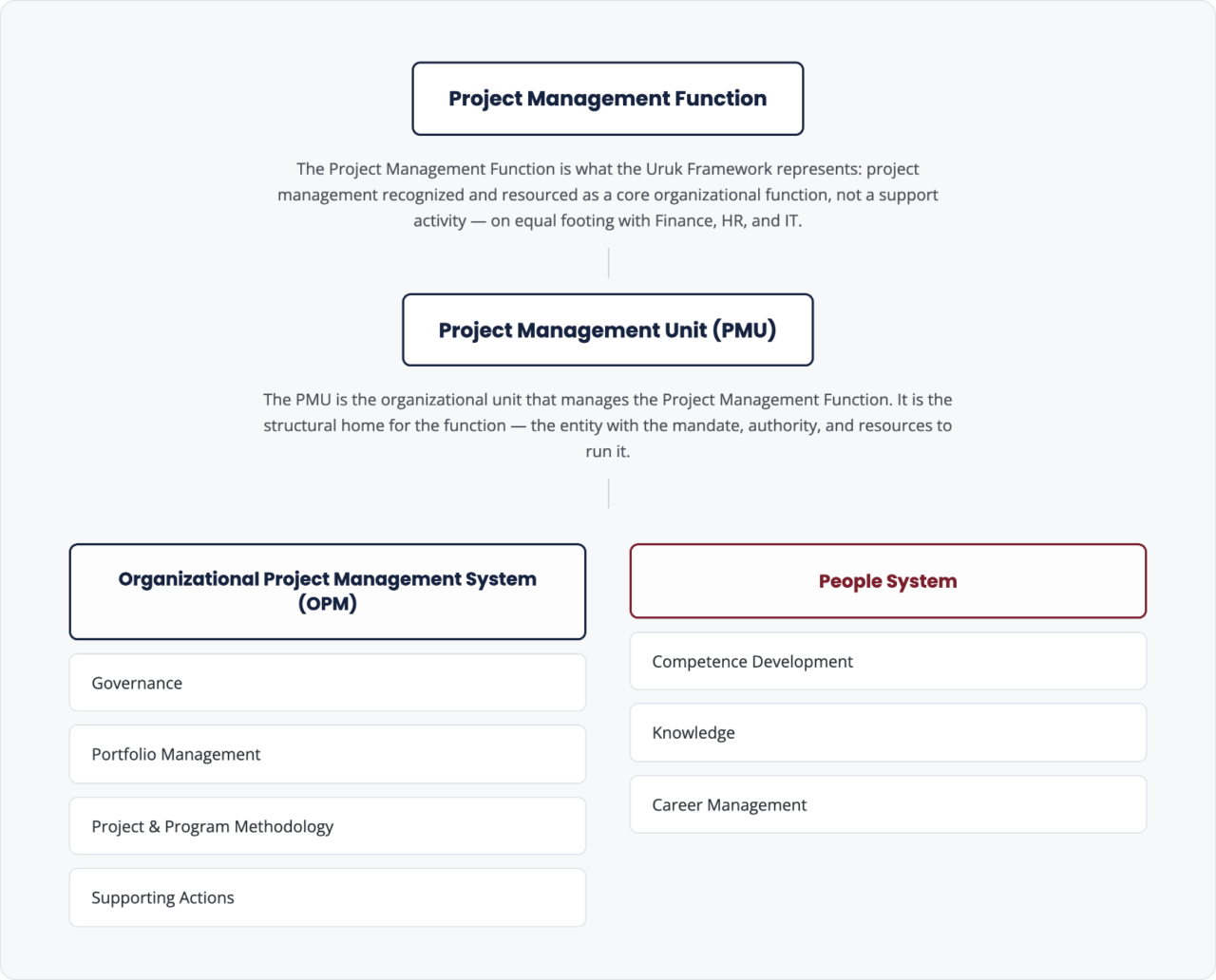
1. Project management is a core organizational function — represented and resourced as such, not a support activity to be delegated.
3. Methodology must be adaptive and tailored — responsive to change and designed for context, not dogmatic.
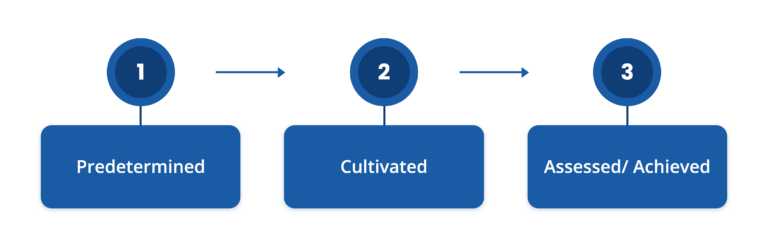
5. Organizational success must be predetermined, cultivated, and assessed — not accidental.
2. Governance is the backbone of decision-making — not an administrative burden.
4. Value delivery requires integration — across strategy, operations, and delivery, not fragmentation.
6. Organizational capability requires the integration of People, Processes, and Technology — no single pillar is sufficient.

It has been proven, through numerous studies, that organizations with a higher level of project management maturity achieve significant performance gains and improved results versus those with lower levels of maturity.
The question is how to build the organization’s project management maturity, which is a direct contributor to organizational success.
The Uruk Framework includes the Seven Elements of Project Management Maturity. This model is not an assessment model. Rather, it is a model to help organizations transform their project management practice and build their competence and maturity, one element at a time.
It starts with the strategic and organizational aspects and includes other elements integrating people, processes, and tools.

At the heart of the Uruk Framework is the Value Delivery Methodology — the Project & Program Methodology element of the OPM System. We have been building and enhancing this methodological process since 2007. It is a dynamic, scalable, and flexible framework that ensures project success from concept to closure.
Unlike rigid, one-size-fits-all approaches, we designed this methodology with two essential principles. The first integrates strategy, governance, product management, and operational readiness into a seamless lifecycle — the Value Delivery Lifecycle — covering a project from ideation to initial operations and success. The second respects the diversity of practice: methods are customized to a given vertical and adapted to fit the type and context of a project, through bespoke tailored methods that are fit for purpose.
It has been proven that following a similar approach leads to significant performance gains, including increasing speed to market and doubling the chance of achieving project objectives.
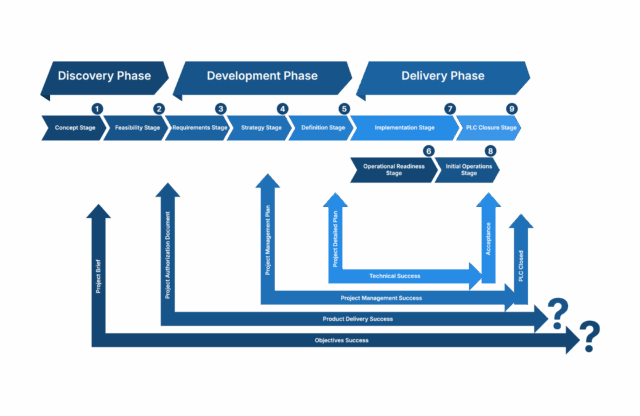
Achieving true project success goes far beyond meeting deadlines or staying within budget. It requires a fundamental shift in how success is defined, designed, and delivered. Too often, projects are labeled as failures without clarity, was it poor execution, lack of adoption, or misalignment with business goals? The Uruk Framework addresses this ambiguity with a structured, systems-thinking model that creates a shared vocabulary for project managers, PMO leaders, executives, and business sponsors alike.
Rooted in our Value Delivery Methodology, the Four Dimensions of Project Success offer a comprehensive, organization-wide lens to predetermine, cultivate, and assess value at every level. This approach emphasizes designing success from the outset through robust feasibility studies and business cases, rather than relying solely on retrospective evaluations.
Our model is not just a diagnostic tool for measuring outcomes; it is a proactive framework for identifying systemic challenges across governance, operations, and support. It helps organizations foster integrated ownership of outcomes and move beyond legacy delivery mindsets toward enabling the right culture, structure, and authority for success.
The Four Dimensions are ultimately a strategic guide for value-oriented transformation, helping leaders build not just better projects, but better environments in which projects can thrive.
It is a widespread practice where project managers often focus on executing and the delivery phase of a project. The challenges with this approach are numerous:
Project Control is a project navigation system and must be ongoing from take-off to landing! It cannot be part-time or only when cruising.


Ensuring project success requires more than just tracking milestones, it demands continuous performance evaluation and proactive decision-making.
The Uruk Framework introduces a structured Six-Step Performance Management Framework, designed to provide real-time insights, maintain accurate and timely forecasts, and optimize execution at every stage.
Timely and accurate performance assessment and forecasting are vital parts of the ongoing feedback system that can give the team early warnings to respond quickly. An effective system can also help the team be proactive and minimize issues, problems, and risks.
While this approach is fully aligned with the Value Delivery Methodology, it is flexible and applicable to any project management framework.
The Uruk Framework six-step model is essential for effective project management!
The PCA Model chapter introduces a framework: Predetermine, Cultivate, and Assess/Achieve, for pursuing project success deliberately rather than hoping for it. While the Four Dimensions of Success define what success means, PCA defines how to pursue it, reinforcing that success is intentional, not accidental.
Predetermine involves three steps: building a solid business case, conducting a feasibility study, and defining measurable success criteria across all four dimensions early on.
Cultivate means proactively managing every project stage through a methodology like VDM, staying diligent, engaging stakeholders, and respecting stage-gate discipline rather than rushing or skipping standards.
Assess/Achieve stresses that success shouldn’t be equated with mere completion. Technical and project management success can be assessed at closure, but the third and fourth dimensions often require evaluation months or years later — so organizations must plan for that longer-term benefits assessment upfront.