Latest from Uruk

Every time there is a change in the PMBOK Guide, and for a year or more before, we start to see the hype, which is quite annoying. One really can find it quite hard to filter through the numerous posts and it might be impossible to distinguish which is a legitimate post, an imitated post...


Project Management certification is highly popular among individuals and organizations. Although the PMP® might not be the best for enhancing organizational performance, it is the preferred certification by those who want to make their CV looks better for potential employers; especially if they are looking for a new job.

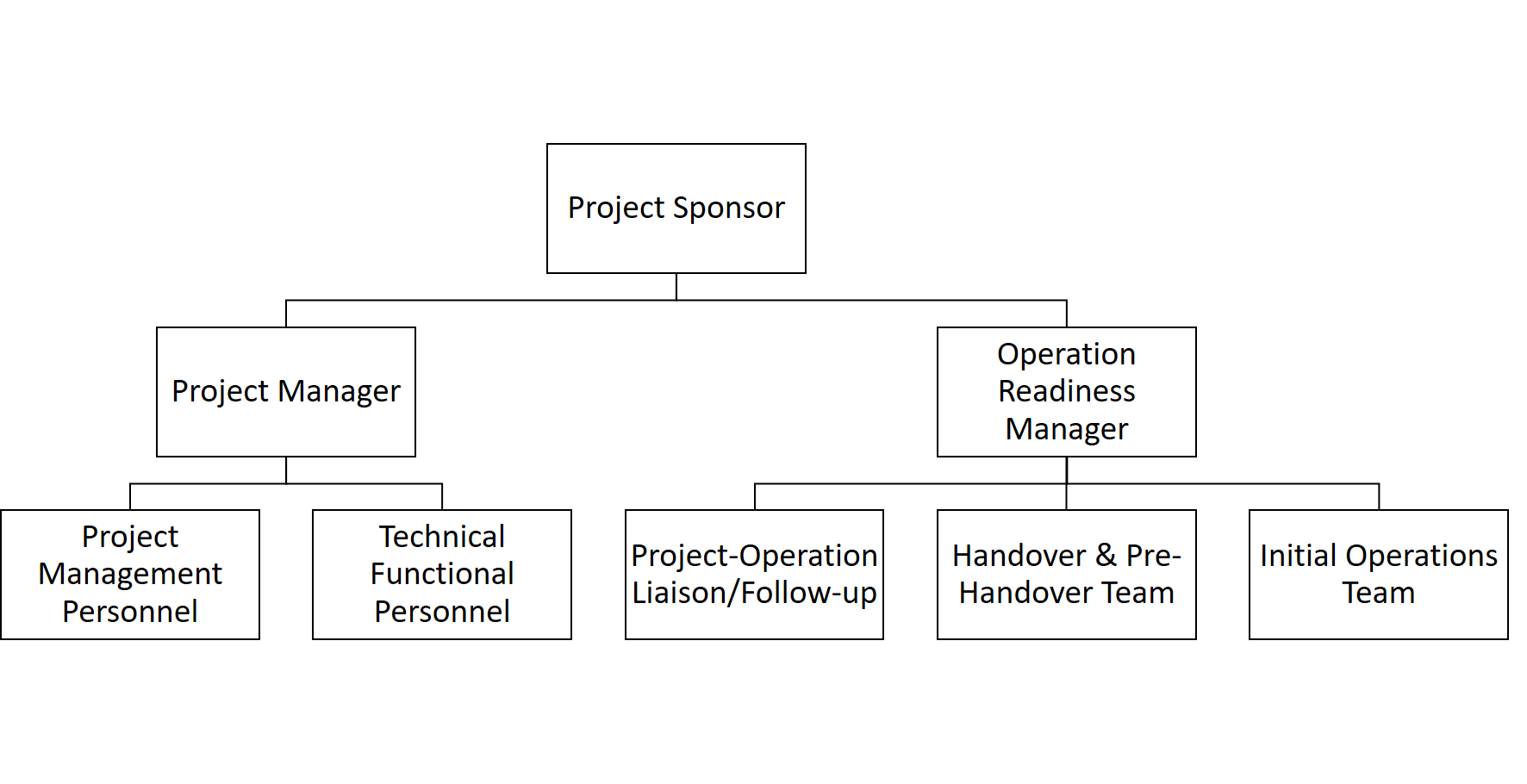
In the previous post, we talked about Who are the people involved in delivering a project? In that article, we discussed the various components of the Extended Project Team, Project Team, and Project Management Team. So regardless of what team we are talking about, is there one team for a given project? What we mean here...

Who are the people involved in delivering a project?

This post is a section of a chapter on project management plan. It is per our CAMMP™ Model, Version 3, and from the Project Management beyond Waterfall and Agile book that will be published later this summer. This section addresses the people aspects, a vital section of the Project Management Plan of a given project.

What happens when Murphy takes over the house?

Many, if not most people in project management know Murphy or Murphy’s Law. According to the Murphy’s Law Website, “If anything can go wrong, it will“. For more information about the origin of this law, visit http://www.murphys-laws.com/murphy/murphy-true.html. What does this mean to us in project management?

Do Agilists really think we are dumb?

In the past, I did write a few articles about Agile and we tried to clarify the difference between Agile (as a movement) versus agile practices (as in being dynamic) You can find these articles here: Article 1 Article 2 Other articles you can find by searching on the word “Agile”